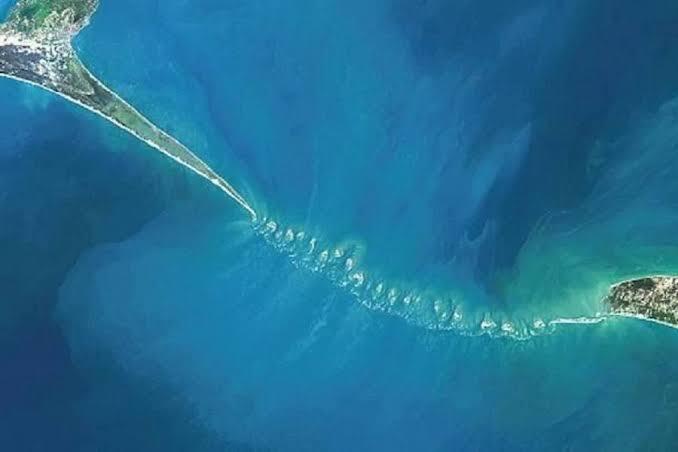
Ram Setu, also known as Adam’s Bridge or Rama Setu, is a legendary chain of limestone shoals connecting Rameswaram (Pamban Island) in Tamil Nadu, India, to Mannar Island in Sri Lanka. Spanning approximately 48 km, this natural geological formation holds immense religious, cultural, and historical significance.
According to the Hindu epic Ramayana, Lord Rama and his Vanara army built this bridge to rescue Goddess Sita from Ravana. Today, it is a major pilgrimage and tourist attraction, especially for devotees visiting Rameswaram. The bridge is best viewed from the Dhanushkodi end, where the Indian Ocean and Bay of Bengal meet.
Ram Setu Bridge Location
Ram Setu lies in the Palk Strait between India and Sri Lanka, starting from the southern tip of Dhanushkodi near Rameswaram.
- Address: Arichal Munai / Dhanushkodi Tip, Rameswaram Island, Ramanathapuram District, Tamil Nadu
- PIN Code: 623526
- Length: Approximately 48 km (natural limestone shoals)
- Significance: Sacred site mentioned in Ramayana, visible from Indian side near Dhanushkodi
How to Reach Ram Setu Bridge
| From | Distance | Approx. Time | Best Options |
| Rameswaram Town | 18–22 km | 45–60 minutes | Taxi, Auto, Tourist Bus |
| Dhanushkodi Beach / Last Point | 2–4 km from viewpoint | 10–15 minutes | Jeep / Cab on sandy road |
| Madurai Railway Station | 170–180 km | 4–5 hours | Train / Cab |
| Madurai International Airport | 190 km | 4.5–5.5 hours | Taxi / Cab |
| Pamban Bridge (Entry to Island) | 12–15 km from Rameswaram | 20–30 minutes | Road via India’s first sea bridge |
| Ramanathapuram | 55 km | 1.5 hours | Bus / Cab |
Note: There is no motorable road or bridge to walk across Ram Setu. Visitors can reach the viewpoint at Dhanushkodi by road/jeep and view the shoals. Boat rides are sometimes available for closer views.
Road & Bridge Connectivity
- Pamban Bridge: India’s first sea bridge (2.2 km long) connecting mainland to Rameswaram Island.
- New Pamban Railway Bridge: Parallel to the old bridge, offering scenic rail connectivity.
- Dhanushkodi Road: Recently improved road leading to the Ram Setu viewpoint.
- The area falls under Ramanathapuram district with good road connectivity from Madurai and other Tamil Nadu cities.
Nearby Areas and Landmarks
The region around Ram Setu is rich in spiritual and natural attractions, especially the ghost town of Dhanushkodi and sacred sites of Rameswaram.
| Landmark / Area | Distance from Ram Setu Viewpoint | Description |
| Dhanushkodi Beach & Ghost Town | 2–4 km | Abandoned town destroyed by 1964 cyclone; dramatic meeting point of Indian Ocean and Bay of Bengal. |
| Arichal Munai (Ram Setu Viewpoint) | At the site | Tip of Dhanushkodi where the chain of shoals begins. |
| Ramanathaswamy Temple | 20 km | One of the 12 Jyotirlinga temples, famous for its massive corridors. |
| Pamban Bridge | 15–18 km | Iconic sea bridge offering beautiful views while entering Rameswaram. |
| Kothandaramar Temple | 10–12 km | Ancient temple believed to be the spot where Vibhishana surrendered to Lord Rama. |
| Dhanushkodi Church Ruins | Nearby | Remains of the old church in the ghost town. |
| Agnitheertham Beach | 20 km | Sacred bathing ghat near Ramanathaswamy Temple. |
| Sri Lanka Coast (Mannar Island) | Across the bridge (~30 km) | Visible on clear days; not accessible for tourists from Indian side. |
Significance
Ram Setu is a unique blend of mythology, history, and natural wonder. For millions of devotees, it is proof of the events described in the Ramayana. Scientifically, it is a chain of limestone shoals formed over thousands of years. The site attracts pilgrims, history enthusiasts, and nature lovers who come to witness the stunning seascape where two mighty water bodies converge. It remains a powerful symbol of faith and ancient engineering.
Frequently Asked Questions (FAQs)
Q1. Where is Ram Setu located?
A: Ram Setu (Adam’s Bridge) is a 48 km chain of limestone shoals between Rameswaram (Dhanushkodi), Tamil Nadu, and Mannar Island, Sri Lanka.
Q2. Can we walk on Ram Setu?
A: No. The structure is mostly submerged or very shallow. Visitors can only view it from the Dhanushkodi tip on the Indian side.
Q3. How to reach Ram Setu from Rameswaram?
A: Travel 18–22 km to Dhanushkodi by cab or bus, then take a jeep to the viewpoint.
Q4. What is the best time to visit Ram Setu?
A: October to March (pleasant weather). Avoid monsoon due to rough seas and strong winds.
Q5. Is a visit to Ram Setu worth it along with Rameswaram?
A: Yes, especially for Ramayana devotees and those who want to experience the beautiful Dhanushkodi seashore.