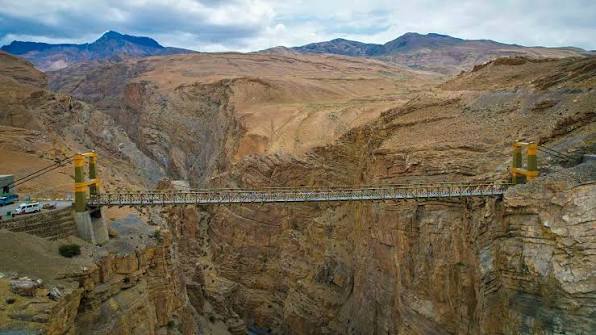
Chicham Bridge is one of the most spectacular and thrilling engineering marvels in India. Located in the remote and rugged Spiti Valley of Lahaul and Spiti district, Himachal Pradesh, it is recognized as Asia’s Highest Suspension Bridge (by altitude) and India’s highest road bridge.
Inaugurated in 2017 after nearly 15 years of construction, the bridge stands at an altitude of approximately 4,150 metres (13,596 feet) above sea level. It spans a deep gorge (around 150–300 metres above the Samba Lamba Nallah, a tributary of the Spiti River) and connects the villages of Chicham and Kibber. Before the bridge, locals had to rely on a dangerous ropeway, and the journey took several hours. The bridge has dramatically reduced travel time and opened up this high-altitude region to more visitors.
Chicham Bridge Location
Chicham Bridge is situated between Chicham and Kibber villages in Spiti Valley, approximately 20 km from the main town of Kaza.
- Address: Chicham Bridge, Near Kibber Village, Spiti Valley, Lahaul & Spiti District, Himachal Pradesh
- Altitude: ~4,150 metres (13,596 ft)
- Span: Approx. 114–120 metres
- Type: Steel girder / Suspension bridge (single-lane)
- PIN Code: 172114 (Kaza area)
How to Reach Chicham Bridge
| From | Distance | Approx. Time | Best Options |
| Kaza (Spiti Valley HQ) | 18–22 km | 45–75 minutes | Taxi, Private Car, Bike |
| Key Monastery | 7–10 km | 20–30 minutes | Taxi / Car |
| Kibber Village | 1–2 km | 5–10 minutes | Walking / Short Drive |
| Manali | 200+ km | 8–12 hours | Via Rohtang & Kunzum Pass |
| Shimla | 420+ km | 14–18 hours | Via Kinnaur Valley |
| Chandratal Lake | 80–90 km | 3–4 hours | Via Kaza |
Best Route: Most travellers base themselves in Kaza and visit Chicham Bridge, Key Monastery, and Kibber as a day trip. The road is rough and adventurous — typical of Spiti Valley.
Note: The bridge is usually accessible from late May to mid-October. Winter visits are possible but highly challenging due to heavy snow.
Road & Bridge Connectivity
- Single-lane bridge allowing one vehicle at a time.
- Connects the remote village of Kibber (one of the highest inhabited villages in the world) with the rest of Spiti.
- Part of the scenic Spiti Valley road network.
- No public buses run directly to the bridge — private taxis, self-driven cars, or bikes are the best options.
Nearby Areas and Landmarks
| Landmark / Area | Distance | Description |
| Kibber Village | 1–2 km | One of the highest motorable villages in the world with traditional mud houses and stunning landscapes. |
| Key (Kee) Monastery | 7–10 km | Largest and oldest monastery in Spiti Valley, perched dramatically on a hill. |
| Kaza | 20 km | Main town of Spiti with markets, hotels, and the famous Key Monastery road. |
| Hikkim | 25–30 km | Home to the World’s Highest Post Office. |
| Langza Village | Nearby | Famous for fossils and the giant Buddha statue. |
| Komic Village | Short distance | One of the highest motorable villages in the world. |
| Samba Lamba Nallah Gorge | Beneath the bridge | Deep dramatic gorge offering breathtaking (and scary) views from the bridge. |
Significance
Chicham Bridge is not just an engineering feat but a symbol of human perseverance in one of the harshest and most beautiful landscapes on Earth. Standing on the bridge and looking down into the deep gorge is an adrenaline-pumping experience. For adventure travellers and nature lovers, crossing or visiting Chicham Bridge is a highlight of any Spiti Valley trip.
Frequently Asked Questions (FAQs)
Q1. What is special about Chicham Bridge?
A: It is Asia’s highest bridge by altitude (13,596 ft / 4,150 m) and offers thrilling views of a deep gorge in the Himalayas.
Q2. Is Chicham Bridge the highest bridge in the world?
A: No, it is one of the highest by deck elevation above sea level and often called Asia’s highest motorable bridge in popular media.
Q3. Can vehicles cross the bridge?
A: Yes, it is a motorable single-lane bridge. Only one vehicle is allowed at a time.
Q4. What is the best time to visit Chicham Bridge?
A: June to September (summer and monsoon) when the roads are open. October can also be good before heavy snowfall.
Q5. Is it safe to visit?
A: Yes, but high altitude precautions (acclimatization, hydration) are necessary. The bridge itself is sturdy, but the views can be dizzying.