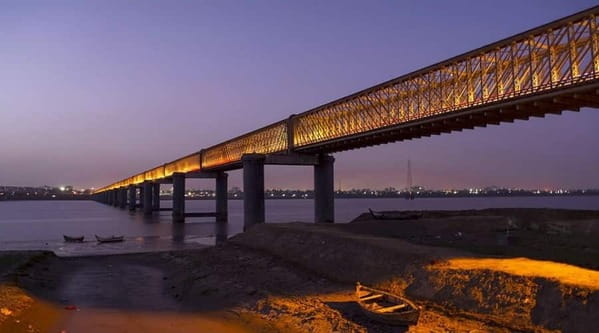
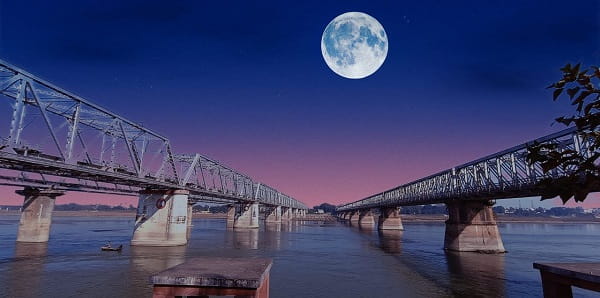
Bogibeel Bridge — India’s longest combined rail-cum-road bridge, the second-longest of its type in Asia, and one of the most strategically vital pieces of infrastructure in the entire Northeast — is a 4.94-kilometre masterpiece of engineering that spans the mighty Brahmaputra River between Dhemaji district on the northern bank and Dibrugarh district on the southern bank, connecting two of Assam’s most important districts across one of the world’s most powerful and most unpredictable rivers. Inaugurated by Prime Minister Narendra Modi on 25 December 2018 — on the birth anniversary of former Prime Minister Atal Bihari Vajpayee, celebrated as Good Governance Day — the bridge carries a double broad-gauge railway track on its lower deck and a three-lane road highway on its upper deck, the first bridge in India to combine both functions in this dual-deck configuration over the Brahmaputra.
The Bogibeel Bridge traces its origins to the Assam Accord of 1985 — the landmark agreement between the Government of India and leaders of the Assam agitation — which mandated a list of major infrastructure projects for the state. The bridge was sanctioned in 1997–98, with its foundation stone laid by Prime Minister H.D. Deve Gowda in January 1997. Construction commenced in 2002 under Prime Minister Atal Bihari Vajpayee but proceeded at a painfully slow pace through successive governments until it was granted national project status in 2007. The final cost escalated to ₹5,960 crore — from an original estimate of much less — as the total bridge length increased from 4.31 kilometres to 4.94 kilometres. The bridge has a designed lifespan of 120 years, and its engineering specifications are extraordinary for the region: it can withstand earthquakes of magnitude 7 on the Richter scale and wind speeds of up to 260 kilometres per hour — making it India’s first bridge to use fully welded steel-concrete composite support beams capable of seismic resistance at this level. The structure connects National Highway 37 on the south bank (Dibrugarh side) to National Highway 52 on the north bank (Dhemaji side), and provides the railway connection between the Rangiya–Murkongselek section of the Northeast Frontier Railway on the northern bank and the Lumding–Dibrugarh section on the southern bank — unifying the entire Northeast railway grid across the Brahmaputra. The bridge has dramatically reduced Dibrugarh–Dhemaji travel time from over 4 to 5 hours (via the longest ferry/road detour) to under 30 minutes, transforming commuter life, commerce, and strategic military mobility across the upper Brahmaputra valley. The Bogibeel Ghat, developed alongside the bridge, has become a major river tourism destination where visitors can enjoy Brahmaputra river cruises and houseboats.
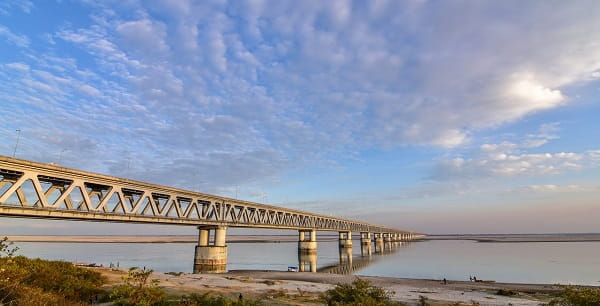
Bogibeel Bridge Location
Bogibeel Bridge spans the Brahmaputra River between Sissibargaon in Dhemaji district (north bank) and the Bogibeel area of Dibrugarh district (south bank) — approximately 17 to 20 kilometres from Dibrugarh city and accessible from NH-37 on the south and NH-52 on the north.
- Address: Bogibeel Bridge, Bogibeel, Dibrugarh District / Dhemaji District, Assam — 786010 (Dibrugarh side)
- Pin Code: 786010 (Dibrugarh side) / 787057 (Dhemaji side)
- STD Code: 0373
- Administrative Zone: Dibrugarh District / Dhemaji District — Assam / Lakhimpur Lok Sabha Constituency
| Reference Point | Distance |
| Bogibeel Ghat (river tourism) | At the bridge |
| Dibrugarh Town | 17 to 20 kilometres |
| Dibrugarh Town Railway Station | 18 kilometres |
| Lapetkota Railway Station | Nearest station (south bank) |
| Dibrugarh Railway Station | 20 kilometres |
| Dhemaji Town | 25 kilometres north |
| Mohanbari Airport (Dibrugarh) | 20 to 30 kilometres |
| Tinsukia | 45 kilometres east |
| Jorhat | 90 kilometres west |
| Guwahati | 460 kilometres west |
| Itanagar (Arunachal Pradesh) | 70 kilometres north |
Directions to Bogibeel Bridge
Bogibeel Bridge is accessible from Dibrugarh on the south bank via NH-37 and from Dhemaji on the north bank via NH-52 — reachable by road, rail, and air through Dibrugarh as the primary base city.
From Dibrugarh Town
Take NH-37 eastward → follow Bogibeel Bridge approach road → approximately 17 to 20 kilometres — 30 to 40 minutes by bus, shared vehicle, or cab.
From Dibrugarh Railway Station
Take taxi or bus toward Bogibeel Bridge via NH-37 → approximately 18 to 20 kilometres — 30 to 40 minutes.
From Mohanbari Airport (Dibrugarh)
Take NH-37 eastward from the airport → approximately 20 to 30 kilometres — 35 to 50 minutes by cab.
From Dhemaji Town (North Bank)
Take NH-52 southward → approach Bogibeel Bridge from the Dhemaji / Sissibargaon side → approximately 25 kilometres — 40 to 50 minutes.
From Guwahati
Take NH-27 (former NH-37) eastward → approximately 460 kilometres — 8 to 10 hours. Alternatively, take a train on the Dibrugarh–Guwahati line to Dibrugarh Station and then taxi to the bridge.
By Train (Crossing the Bridge)
Take any train service on the Dibrugarh–Murkongselek or Tinsukia–Naharlagun corridor — the train crosses Bogibeel Bridge en route, offering one of the most spectacular rail journeys across the Brahmaputra.
Road Connectivity Bogibeel Bridge
Bogibeel Bridge connects two of Assam’s most important National Highways — creating a direct multi-lane link between upper Assam’s river-divided districts and unlocking strategic access to Arunachal Pradesh.
| Road | Direction | Connectivity |
| National Highway 37 (south bank) | West toward Dibrugarh | Dibrugarh city, Tinsukia, Sibsagar, Jorhat, Guwahati |
| National Highway 52 (north bank) | North toward Dhemaji | Dhemaji, Lakhimpur, North Lakhimpur, Itanagar (Arunachal Pradesh) |
| NH-37 — East approach | East via Dibrugarh | Tinsukia, Margherita, Stilwell Road (border zone) |
| Bogibeel Ghat Road | At the bridge | Bogibeel Ghat river tourism facility — houseboats and cruises |
| Murkongselek Road | North | Murkongselek Railway Station — Northeast Frontier Railway connection |
| Itanagar Road (via NH-52) | North | Arunachal Pradesh state capital — 70 km after crossing the bridge |
Bus and Local Transit Connectivity Bogibeel Bridge
Bogibeel Bridge is served by Assam State Transport Corporation (ASTC) buses and private services operating between Dibrugarh and Dhemaji on the new direct route across the bridge — the most dramatic transformation in daily commuter life since the bridge’s 2018 inauguration.
| Service | Details |
| ASTC (Assam State Transport Corporation) | Regular ASTC bus services on the Dibrugarh–Dhemaji direct route via Bogibeel Bridge |
| Private Buses / Shared Vehicles | Multiple private operators — Dibrugarh to Dhemaji via bridge — running throughout the day |
| Winger / Shared Sumo | Shared Tata Sumo and Winger services from Dibrugarh Town to Bogibeel Bridge and Dhemaji |
| Taxi from Dibrugarh | Available at Dibrugarh Railway Station and city centre — direct hire to Bogibeel Bridge |
| Auto-Rickshaw | Available at Bogibeel Bridge ends for local zone access |
Railway Connectivity Bogibeel Bridge
Bogibeel Bridge carries a double broad-gauge railway track on its lower deck — providing the critical rail connection between two sections of the Northeast Frontier Railway that were previously separated by the unbridged Brahmaputra.
| Station | Distance | Line | Notes |
| Lapetkota Railway Station | Nearest on south bank | Northeast Frontier Railway | Closest station — buses and wingers available |
| Dibrugarh Town Railway Station | 18 km | Northeast Frontier Railway | Second-closest station — more frequent trains |
| Dibrugarh Railway Station | 20 km | Northeast Frontier Railway | Primary Dibrugarh terminus |
| Murkongselek Railway Station | On north bank approach | Northeast Frontier Railway | Northeast Frontier Railway northern terminus |
Trains crossing the bridge on the Tinsukia–Naharlagun intercity corridor were the first railway services to use the bridge — inaugurated simultaneously with the bridge by PM Modi in December 2018.
Nearby Areas and Landmarks Bogibeel Bridge
The Bogibeel Bridge zone combines one of Assam’s most dramatic riverscapes with proximity to some of the Northeast’s most remarkable natural, cultural, and ecological landmarks — making it an ideal anchor for a multi-day northeastern India itinerary.
| Landmark / Area | Distance | Description |
| Bogibeel Ghat | At the bridge | River tourism facility — Brahmaputra cruises, houseboats, picnicking |
| Dibrugarh Tea Gardens | 20 km | Historic tea plantations — guided tours — Assam’s renowned Dibrugarh tea |
| Dibru-Saikhowa National Park | 30 km | One of India’s most biologically diverse national parks — feral horses, river dolphins |
| Dehing Patkai Wildlife Sanctuary | 35 km | Last surviving lowland tropical rainforest in South Asia |
| Jagannath Temple, Dibrugarh | 20 km | Important Vaishnava temple — sacred landmark of Dibrugarh city |
| DTP Dyke, Dibrugarh | 20 km | Scenic Brahmaputra riverside promenade — cycling and evening walks |
| Majuli Island (via Jorhat) | 120 km west | World’s largest river island — Vaishnavite satras and Assamese culture |
| Itanagar, Arunachal Pradesh | 70 km north | Arunachal Pradesh capital — accessible via NH-52 after bridge crossing |
Frequently Asked Questions (FAQs)
Q1. Where is Bogibeel Bridge located in Assam?
A: Bogibeel Bridge spans the Brahmaputra River between Bogibeel in Dibrugarh district (south bank) and Sissibargaon in Dhemaji district (north bank) — approximately 17 to 20 kilometres from Dibrugarh city. It is India’s longest combined rail-cum-road bridge at 4.94 kilometres.
Q2. When was Bogibeel Bridge inaugurated and by whom?
A: Bogibeel Bridge was inaugurated by Prime Minister Narendra Modi on 25 December 2018 — on Good Governance Day (birth anniversary of PM Atal Bihari Vajpayee) — after 21 years of construction beginning in 2002 at a final cost of ₹5,960 crore.
Q3. How do I reach Bogibeel Bridge from Dibrugarh?
A: Take NH-37 eastward from Dibrugarh city → approximately 17 to 20 kilometres — 30 to 40 minutes by ASTC bus, shared Sumo/Winger, or taxi. Nearest airport is Mohanbari (Dibrugarh Airport) at 20 to 30 kilometres.
Q4. Can trains cross Bogibeel Bridge?
A: Yes. The bridge carries a double broad-gauge railway track on its lower deck — connecting the Northeast Frontier Railway’s Rangiya–Murkongselek section (north bank) with the Lumding–Dibrugarh section (south bank). The Tinsukia–Naharlagun intercity express was the first train to use the bridge.
Q5. What is the best time to visit Bogibeel Bridge?
A: October to March is ideal — the weather is pleasant, skies are clear, and sunset views over the Brahmaputra from the bridge are spectacular. The Bogibeel Ghat adjacent to the bridge offers river cruises and houseboats throughout the year.