Living room walls carry a weight that no other room’s surfaces have to manage, because the living room is the space where the design decisions of the whole home become most visible and most evaluated by the people who live in it and the people who visit. It is also the room that gets the most natural light in most Indian homes, which means the materials and finishes on its walls are seen under the most demanding conditions and need to read well across different times of day and different light qualities.
The direction contemporary Indian living room design has taken is one that values material texture and surface depth over applied decoration. A wall treatment that creates visual interest through its own physical quality, whether through a ridged profile, a realistic stone or wood grain, or a layered combination of materials, tends to hold up better over time than one that introduces pattern or ornamentation on an otherwise flat surface.
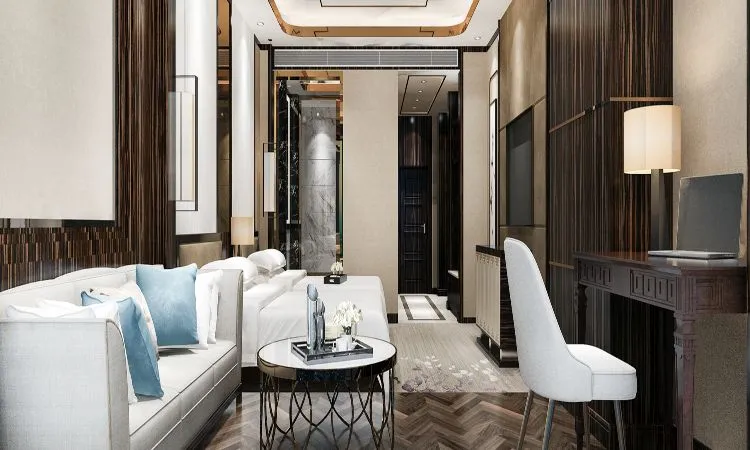
Wall Treatments That Define the Room’s Design Language
The television wall is where the most concentrated design effort in a living room typically goes, and there is a good reason for that. It is the wall toward which furniture is oriented, the one that is seen from every seating position in the room, and the one where the visual design of the space is most directly communicated. A television wall with a considered material treatment, whether that is a panel finish behind the screen, a full-height textured surface, or a combination of shelving and surface material, sets the design register for the whole room.
Laminate sheets are one of the most practical choices for living room wall panels because they handle the daily conditions of a living room, which include sunlight exposure, humidity from cooking and breathing, and occasional contact, better than paint or wallpaper do over time. The surface is consistent and cleanable, the range of available finishes is wide, and the application process is far less disruptive than alternatives like stone cladding or ceramic tile. Advance Laminates offers a range across wood-grain, stone-effect, matte solid, and textured finishes that covers most living room design directions without requiring multiple suppliers. The full range of laminate sheets options is available to browse through, which makes comparing finishes across different aesthetic directions easier before a decision is committed to.
Feature walls in living rooms that are not the television wall are a smaller design opportunity but a meaningful one, particularly in rooms with a defined accent wall opposite the main seating area or behind a console or sideboard. A single wall in a deeper tone or a richer texture than the surrounding surfaces creates a focal point that gives the room a sense of directionality without requiring structural changes.
Panel combinations, where different sections of a single wall carry different surface treatments within a defined frame or grid, have become a strong direction in contemporary Indian living room design. The approach works particularly well when the panel design ties together two materials that appear elsewhere in the room, such as a wood-grain laminate panel combined with a stone-effect laminate in an adjacent section, because it creates a surface that is varied without being busy. The Louvers Panel Ideas for Living Room resource covers how this direction applies specifically to panel-based wall treatments in living spaces, which is useful context for understanding how different panel formats play out in real room conditions.
Ceiling and Floor Connections
Living room wall design that considers the surfaces above and below it, rather than treating the wall as an isolated decision, tends to produce more coherent results. A wall finish in a warm wood tone sits differently against a light-colored ceiling than against a dark one, and the floor material, whether tile, wood, or laminate, affects how the wall’s lower portion reads in terms of contrast and visual grounding.
Coving and skirting details, where the wall meets the ceiling and the floor respectively, are finishing elements that disproportionately affect how polished a living room interior looks overall. A wall with a careful material treatment that runs straight into an unfinished or mismatched skirting detail loses some of the quality it was trying to establish. Getting the edge conditions right takes less time and effort than the main surface work but has an outsized effect on the final result.
Natural light management is the other consideration that connects the wall to the rest of the room. A living room that gets strong afternoon sunlight will show every material in a different and more demanding light than a showroom or north-facing room would. Matte and textured surfaces tend to be more forgiving in strong light than high-gloss ones, and checking material samples in the actual room at different times of day is worth the effort for a surface that will be seen for years.